Introduction: The AI Revolution on the Podium
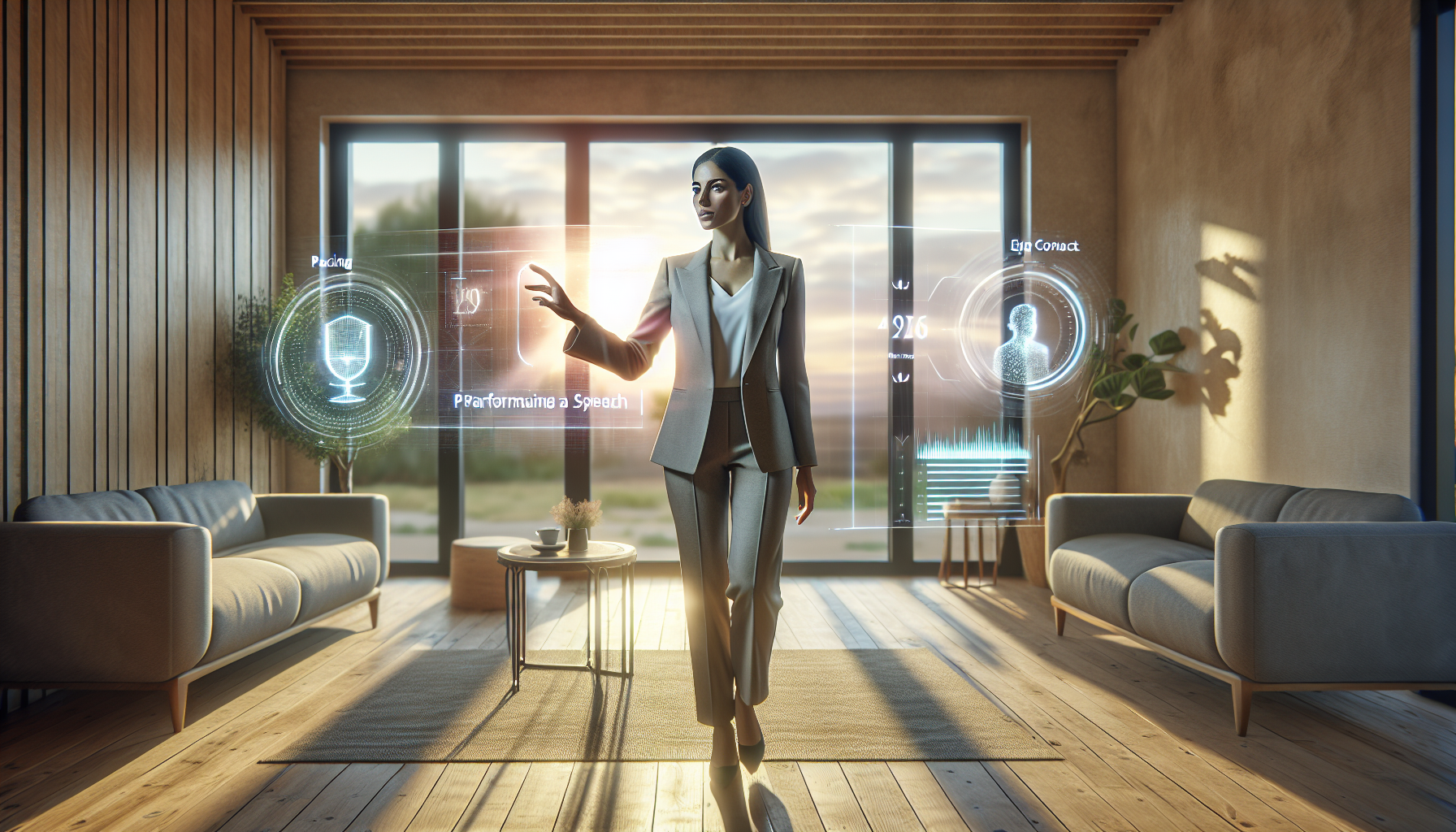
Imagine standing in front of an audience—palms dry, heart steady, words flowing with clarity and conviction. For countless people, this is the dream. Public speaking sits at the crossroads of self-doubt and influence, and by all accounts, is one of humanity’s greatest challenges. But what if I told you the latest artificial intelligence (AI) tools could turn that dream into reality? In 2024, learning how to use AI to improve public speaking skills is no longer science fiction; it’s an accessible, transformative possibility.
Within a few years, AI has disrupted everything from scientific research to creative writing. Now, it’s quietly—but radically—reshaping how we rehearse, receive feedback, and grow as speakers. Whether you’re preparing for TEDx, a career-elevating pitch, or just wanting to conquer Zoom anxieties, AI-powered solutions can become your secret coach. But how does it work? And where should you start?
Let’s journey into the intersection of AI and human communication, and unpack the strategies, tools, and mindset shifts that will propel your public speaking to a professional level.
Core Concepts: How AI Meets Public Speaking
The relationship between artificial intelligence and public speaking rests on several foundational concepts. Understanding them can help you wield this technology with nuance—not just as a novelty, but as a serious advantage.
Feedback at Human Speed—Or Faster
One advantage AI offers is instant, unbiased feedback. Instead of waiting for a coach or crowd, AI tools analyze your delivery right away. Metrics like pacing, word choice, vocal energy, and even facial expressions are tracked digitally, allowing for almost immediate iteration.
Personalized, Data-Driven Growth
AI’s real strength is personalization. It doesn’t just grade you; it learns your patterns, pinpoints habitual slip-ups, and suggests targeted improvements. This bespoke guidance translates to faster, steadier growth.
Simulation and Practice Without Pressure
Not everyone has access to a live audience or mentor. AI creates virtual practice environments—think simulated audiences, AI-avatars reacting in real time, or VR spaces. This means you can rehearse challenging scenarios, handle tough questions, or battle nerves in the comfort of your living room.
Natural Language Processing and Emotional Intelligence
Modern AI taps into natural language processing (NLP), enabling it to critique grammar, tone, and rhetorical devices. Some platforms are even trained to detect emotional cues, ensuring your message aligns with your intent.
These core concepts underpin the future of effective communication. Now, let’s break down the most potent ways to harness them.
7 Key Strategies for Using AI to Improve Public Speaking Skills
1. Embrace AI-Powered Feedback Loops
Perhaps the most immediate benefit of AI in public speaking is actionable feedback. Platforms like Presentr and Orai ingest your recorded speech, then dissect it: words-per-minute, filler usage, vocal pitch, pausing patterns, and even body language cues if using video.
Unlike a human friend or mentor who might hesitate to be blunt, AI delivers constructive criticism with precision and zero emotional bias. Is your volume dipping mid-sentence? Are “um” and “like” infiltrating every turn of phrase? You’ll know instantly.
Iterate quickly: record, review, adjust, repeat. This feedback loop accelerates skill acquisition far beyond old-school methods. For professionals with busy schedules, condensing weeks of practice into a few smart sessions is a game-changer.
2. Use Virtual Audiences for Realistic Simulation
Even the most polished script can unravel in front of a crowd. Enter AI-powered virtual audiences. VR coaching tools—such as Ovation—allow you to practice in front of simulated people who fidget, cough, or look away, mimicking real listener behavior. Some platforms generate AI-generated follow-up questions or even “heckle” to test your composure.
This kind of exposure works like psychological inoculation. Rehearsing repeatedly in varied virtual settings builds your resilience. When the real moment arrives, you’re not just prepared, you’re unflappable.
3. Analyze and Optimize Speech Patterns with AI Tools
Speech analysis platforms leverage NLP and machine learning to highlight patterns you might miss—including speech clarity, word diversity, and sentence complexity. Tools like Microsoft’s “Speaker Coach” integrated in PowerPoint, or newer startups like Yoodli, help fine-tune your messenger habits.
These tools don’t just count “likes” and “ums”—they compare your structure against known best practices. For instance, are your transitions logical? Are you balancing stories and facts? Are you closing with memorable impact? This kind of holistic analysis takes you from passable to truly persuasive.
4. Leverage AI for Scriptwriting and Storytelling
Even if delivery is king, content is queen. AI writing assistants (such as ChatGPT or Jasper) help craft scripts, prompts, and talking points. Feed them your topic and audience, and they’ll propose outlines, generate rhetorical questions, or suggest analogies and anecdotes tailored to your context.
You remain the architect, but with AI as your creative sparring partner, you avoid writer’s block, sharpen your argument, and introduce stylistic flair. Some advanced tools even optimize language for emotional resonance—helping your words not only inform, but also inspire.
5. Practice Non-Verbal Communication with AI Video Analysis
It’s been said that more than half of communication is non-verbal. AI video analysis software can review your eye contact, posture, hand movements, and facial expressions. By providing visual heatmaps and gesture-tracking, tools like Orai and Yoodli let you see objectively what the audience perceives—sometimes more revealing than verbal feedback alone.
Are you leaning in? Fidgeting? Smiling at key moments? AI feedback helps you harness body language intentionally, aligning your presence with your message.
6. Personalize Practice With Adaptive Learning Platforms
AI-powered solutions are getting smarter about individual learning curves. Adaptive learning platforms monitor your progress and modify practice regimens in real time, emphasizing weak spots or new challenge areas.
For example, if you consistently falter in Q&A scenarios, these tools can simulate tougher questioning or increase the “randomness” of audience interjections. Over time, your development plan becomes as unique as your fingerprint—in stark contrast to one-size-fits-all courses.
7. Use AI to Conquer Stage Fright and Performance Anxiety
It’s easy to overlook, but AI can help tackle the psychological hurdles of public speaking, too. Some applications integrate biofeedback hardware or prompt you to track anxiety levels before, during, and after practice.
Sophisticated coaching bots can recommend personalized techniques: guided breathing, power-posing, or reframing negative thoughts. Others gamify practice, rewarding progress with badges or tracked “streaks.” Taken together, these approaches demystify anxiety and replace it with grounded confidence.
8. Refine Pronunciation and Accent With AI Speech Models
Globalization means public speaking audiences are more diverse than ever. AI-driven pronunciation coaches, such as ELSA Speak or FluentU, use proprietary speech recognition models to help users smooth out accents, improve enunciation, and increase overall intelligibility.
This is especially powerful for non-native English speakers or professionals needing to communicate clearly across borders. Rather than guessing at “correct” pronunciation, you receive clear, granular correction suggestions, delivered in a supportive, private environment.
9. Track Long-Term Progress and Set Data-Driven Goals
AI platforms excel at capturing longitudinal data—tracking scores, metrics, or video comparisons across weeks or months. Some tools offer dashboards that plot your improvements in clarity, emotional engagement, or confidence over time.
By seeing quantifiable gains, you reinforce motivation. You can identify trends and set precision goals: speaking at 130 WPM instead of 150, reducing filler words by 40%, or aiming for consistent eye contact. This “quantified self” approach turns sporadic practice into systematic mastery.
10. Collaborate and Receive Remote Feedback via AI Platforms
Many modern AI-powered public speaking solutions offer cloud-based account features. Share your recordings with a coach, mentor, or peer group anywhere in the world, and receive both AI-generated and human-augmented feedback.
This hybrid approach blends the best of both worlds: immediate, data-backed insights plus nuanced, empathetic advice. You can also revisit peer reviews side-by-side with automated scores, deepening your understanding of what truly moves an audience.
Practical Applications / Real-World Examples
The seismic shift towards remote and hybrid work has turbocharged the adoption of AI for public speaking practice. Let’s zoom in on tangible examples from around the globe:
Case Study: Corporate Communications Training
A major European consultancy adopted an AI-powered speech analysis platform for its leadership team. By recording sales presentations into the system, managers received granular feedback on voice modulation and persuasive storytelling. Sessions quickly evolved from stilted PowerPoint readings to engaging, high-impact pitches.
Case Study: Academic Presentation Mastery
At a U.S. university, undergraduate science majors often faced fear presenting complex data. A pilot program implemented virtual reality simulations with AI-driven virtual audiences who responded in real time. Within weeks, students reported a 60% boost in self-reported confidence and a nearly 30% improvement in objective scoring by external evaluators.
Solo Professionals and Content Creators
Consultants, YouTubers, and even poets are using AI voice and video analysis to refine both scripted monologues and spontaneous delivery. The feedback loop—recording, receiving targeted critiques, and re-recording—gives solo creators an edge that would have been unthinkable a decade ago.
Real-World Remote Collaboration
One executive coach based in Australia now works with clients across continents. By sharing AI-analyzed recordings, she tailors guidance to students’ unique tics and strengths, closing the geographic gap entirely.
In all these cases, the synergy between human creativity and AI analytics elevates results well beyond what either could achieve alone.
Common Mistakes to Avoid When Using AI to Improve Public Speaking Skills
As with any tool, the path to mastery isn’t always smooth. Here are pitfalls to watch for when using AI to improve public speaking skills:
Over-Reliance on Quantitative Metrics
Many new users become fixated on their “score” or dashboard stats. But AI can’t always capture subtleties like charisma, humor, or cultural resonance. Use quantitative feedback for baseline improvement, but don’t let it replace your unique voice.
Ignoring Context and Audience Nuances
AI analytics can sometimes miss the importance of tailoring content to different audiences. What works for a keynote may sound flat in a team meeting. Always contextualize AI suggestions through your own understanding of the event and your listeners.
Practicing Only With AI, Not with Real Humans
Virtual audiences and bots are invaluable, but no algorithm can perfectly model the live energy of a real crowd. Schedule practice runs with colleagues or friends in between AI sessions to round out your skills.
Adopting a “One and Done” Mentality
Some speakers treat AI analysis as a one-shot deal: record, review, walk away. True progress comes from looping through multiple iterations, setting new goals, and layering complexity as you improve.
Misunderstanding the Role of AI as an Assistant—Not a Replacement
AI is a coach, not a stand-in. Ultimately, authentic public speaking is powered by your values, creativity, and adaptability. No bot can deliver a meaningful story or connection on your behalf.
Frequently Asked Questions (FAQ)
1. Can AI really help me overcome my fear of public speaking, or will it make things worse?
AI is no replacement for exposure to real audiences, but it serves as a powerful safety net. By simulating challenging scenarios and tracking your physiological responses, AI helps demystify the experience of public speaking. Over time, repeated practice reduces anxiety while building healthy confidence. Pairing AI-driven practice with live presentations yields the greatest results.
2. Are AI tools for public speaking affordable, or are they just for big businesses?
The democratization of AI means many effective tools are now within reach for individuals and small organizations. Some core features—like basic speech analysis through online platforms—are even free or included with popular applications such as PowerPoint. More comprehensive solutions vary in price (usually by subscription), but most offer free trials so you can test what fits your needs before committing.
3. How accurate are AI speech and video analysis tools compared to human coaches?
AI can be startlingly precise at measuring quantifiable metrics: pacing, filler words, clarity, and even aspects of body language. That said, human coaches excel at picking up nuance, intention, and audience-specific factors. The best approach is hybrid—using AI for fast, objective feedback and human mentors for the subjective, empathetic touch.
4. Will AI make my speaking style too robotic or formulaic?
Only if you rely on it blindly. AI models are trained on a mix of best practices and mass data, so recommendations may favor “safe” patterns. Use these insights as a foundation, not a straightjacket. Blend AI-backed optimization with your own flavor, storytelling, and risk-taking—that’s what sets great speakers apart.
5. Can AI help non-native speakers deliver more effective presentations?
Absolutely. AI pronunciation coaches and language feedback tools are especially valuable for non-native speakers, as they offer granular, real-time corrections without embarrassment. This accelerates proficiency, boosts confidence, and enhances cross-cultural communication. Consistent practice ensures you sound polished and understandable in any setting.
Conclusion: A New Era for Human Connection
A decade ago, AI was a distant buzzword—more associated with science fiction than the reality of making a room full of people lean in and listen. Today, it’s a partner and catalyst, unlocking the kind of feedback loops, immersive simulations, and confident delivery that even world-class speakers once struggled to access.
But here lies the true magic: AI doesn’t erase the human in communication. It amplifies it. By accelerating practice, surfacing blind spots, and freeing us to experiment, these digital coaches help more people find their authentic voices and deliver them with clarity.
Whether you’re prepping for boardrooms, classrooms, or stadiums, the choice is yours. Will you step into this new era, using intelligence—both human and artificial—not just to inform, but to inspire? The future of public speaking is here, and it’s smarter, more accessible, and more empowering than anyone could have dreamed.
For further reading on the intersection of AI and communication, the Harvard Business Review explores what AI can and can’t do in the workplace, and Future of Life Institute covers benefits and risks of AI more broadly.